



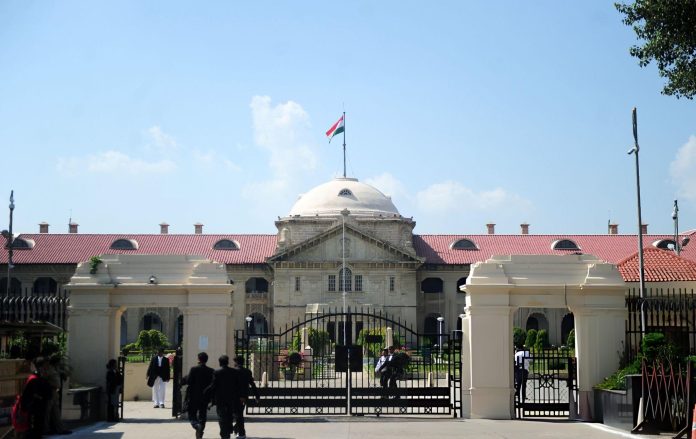
Prayagraj, UP – The Allahabad High Court has granted bail to a Tamil Nadu resident, Dev Sahayam Deniyal Raj, in connection with an alleged unlawful religious conversion case originating from Uttar Pradesh’s Mirzapur district.
Justice Ashutosh Srivastava oversaw the bail application, which was approved after considering various aspects of the case.
According to police accounts, Deniyal Raj was identified as the alleged ringleader of a group involved in luring individuals for religious conversion. Law enforcement agencies claimed his gang had successfully converted 70 people and was in the process of planning to convert an additional 500 when he was apprehended in September of last year.
Deniyal Raj, along with co-accused Paras, has been incarcerated since September 30, 2025. Both individuals were booked under Sections 3 and 5(1) of the Uttar Pradesh Prohibition of Unlawful Conversion of Religion Act, 2021.
Investigators further alleged that the modus operandi of the gang involved targeting impoverished, vulnerable, and tribal communities. They purportedly enticed these individuals to convert to Christianity by organizing ‘healing prayer meetings’ and offering financial assistance.
During police interrogation, Deniyal Raj reportedly confessed to being appointed as the field in-charge by the Indian Missionaries Society, Tamil Nadu, claiming active involvement in the area since July 2025. He also stated that a total of eight missionaries operated under his supervision, receiving salaries, allowances, and funds for their preaching activities from the society. These missionaries allegedly visited villages, engaging women in church activities under the guise of providing sewing-embroidery training and financial aid, gradually leading them towards conversion.
Deniyal Raj’s legal team, however, argued that their client is innocent and has been falsely implicated. They contended that the First Information Report (FIR) was lodged by Indrasan Singh, who is neither an aggrieved party nor a relative or immediate family member of any affected individual, thereby rendering the prosecution unsustainable. Furthermore, the defense highlighted that no incriminating evidence had been recovered from Deniyal Raj’s possession.
The High Court’s decision to grant bail was based on an evaluation of the nature of the accusations, the potential severity of the punishment upon conviction, the quality of supporting evidence presented, and the reasonable apprehension of witness tampering.
In its order dated January 28, the court explicitly stated that, without commenting on the merits of the case itself, a strong enough case for bail had been presented, leading to the relief being granted to the applicant.

